Interlaken or Lucerne: which base is right for your Swiss trip
These are the two bases worth arguing about, and they are not variations on each other. Lucerne is a lake city that sells mountains. Interlaken is a mountain base that happens to have a town in it. On a short trip they are an either/or, and picking wrong costs you the trip's character, not just a train fare.
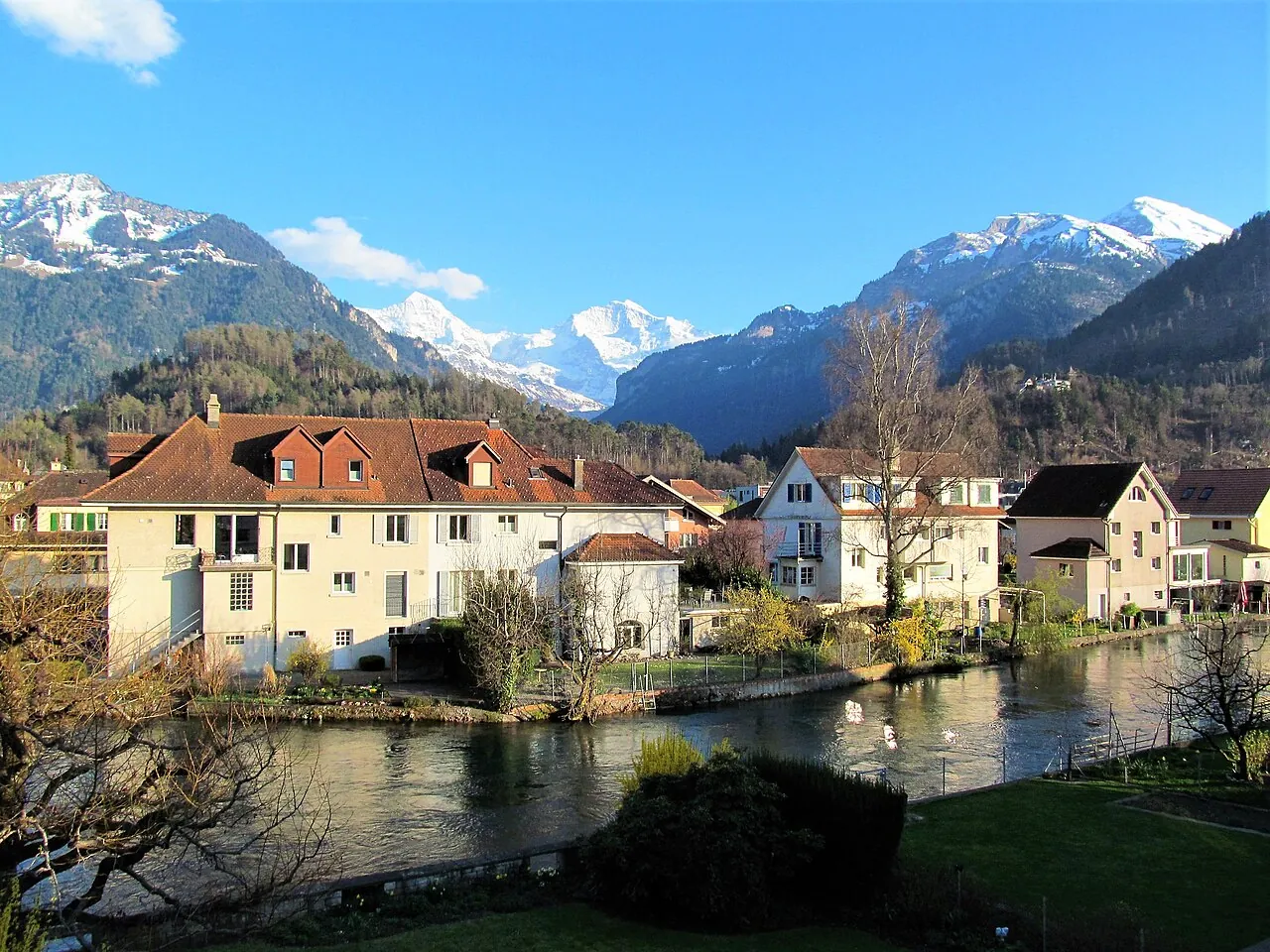
Reviewed
Choose Lucerne if you want a real city on a lake, with Rigi, Pilatus, and Titlis as day trips; Rigi is included with the Swiss Travel Pass. Choose Interlaken if the mountains are the trip and the town is mainly where you sleep: it is the best-connected gateway to Grindelwald, Lauterbrunnen, Wengen, Mürren, and Jungfraujoch. On three to five nights, pick one base rather than splitting the stay.
Lucerne or Interlaken at a glance.
The same trade-offs the sections below explain, in one table.
| Question | Lucerne | Interlaken |
|---|---|---|
| What it is | A compact lake city with an old town, the Chapel Bridge and a lakefront | A transport hinge between two lakes; a functional town rather than the attraction |
| Mountain days | Rigi, Pilatus and Titlis as day trips | Grindelwald, Lauterbrunnen, Wengen, Mürren, Schilthorn and Jungfraujoch within reach |
| Swiss Travel Pass value | Rigi included outright; lake boats and town transport covered | Headline excursions only discounted: Jungfraujoch 25% |
| Evenings | Restaurants and city life without leaving the base | Quiet; the town is where you sleep |
| Best for | A first Swiss trip, a city as well as mountains, pass holders | The Jungfrau valleys as the trip, with the widest connections |
The practical difference
Lucerne is a compact city with a lakefront, an old town, and direct rail links in several directions. Interlaken is a transport hinge between two lakes, with trains branching toward Grindelwald and Lauterbrunnen. Lucerne gives you more to do without leaving the base; Interlaken gives you more ways to reach the Jungfrau valleys quickly.
Lucerne is a city that opens onto the mountains
Lucerne gives you something Interlaken cannot: an actual city. A medieval old town, the Chapel Bridge, a lakefront, restaurants that exist for residents, and rail connections in every direction. Pilatus, Rigi, and Titlis all work as day trips from the lake. Rigi is one of only three mountains the Swiss Travel Pass includes outright, which can make it the simplest mountain day for a pass holder.
Interlaken is the gateway to the Jungfrau region
Interlaken is where you sleep between two lakes so that Grindelwald, Lauterbrunnen, Wengen, Mürren, Schilthorn, and Jungfraujoch are all within reach. Two stations and dense connections make it easy to change plans. The trade is that the town itself is functional rather than the main attraction, and its headline mountain excursions are only discounted—not fully included—by the Swiss Travel Pass.
The two-hour trap
Lucerne and Interlaken are roughly two hours apart by the usual rail route, close enough to combine and far enough that changing hotels consumes part of a day once packing, check-out, travel, and check-in are counted. They answer different questions: city-and-lake with mountain days, or mountains with a bed at the bottom. If you have a week or more, the sequence can work. On three to five nights, pick one and go deeper instead.
The questions people actually ask.
Use the short answers below to settle the practical details before you book.
Interlaken or Lucerne — which is better?
Neither is universally better. Choose Lucerne if you want a lake city as well as mountains, or if Rigi's inclusion with the Swiss Travel Pass matters. Choose Interlaken when the Jungfrau region is the trip and the town is mainly a well-connected place to sleep.
Can I visit both Interlaken and Lucerne in one trip?
On a week or more, yes. On three to five nights it is usually a poor trade: the rail journey is roughly two hours, but packing, check-out, travel, and another check-in consume part of a day, and both places reward a deeper stay.
Which is better for a first visit, Lucerne or Interlaken?
Lucerne is the easier first choice if you want a city, a lake, and several mountain options in one base. Choose Interlaken instead when the Jungfrau valleys are the main reason for the trip.
The mistakes that cost money here.
Fares, opening, and mountain conditions can change. Check the current detail with the linked operator.
Choosing a base before deciding which mountain or valley days the trip needs.
Splitting a four-night trip across both and losing part of a day to packing, the roughly two-hour rail journey, and another check-in.
Choosing Interlaken for the town. The town is a base; the Jungfrau region is the reason.
Assuming both bases give the same pass value. They do not — Lucerne's Rigi is included in the Swiss Travel Pass and Interlaken's headline excursions are not.
Keep the plan coherent.
Move between guides by decision type: the pass, the region, the village, the big excursion, the mountain, and rail versus road.
Where to stay in the Jungfrau region
Compare Interlaken, Grindelwald, Lauterbrunnen, Wengen, and Mürren by rail access, car access, luggage, scenery, and evening atmosphere.
Pilatus, Rigi, or Titlis: which Lake Lucerne mountain to actually do
Compare Pilatus, Rigi, and Titlis by journey, scenery, weather risk, and Swiss Travel Pass coverage before choosing a Lake Lucerne mountain day.
Swiss Travel Pass or point-to-point tickets: the honest arithmetic
2026 Swiss Travel Pass prices start at CHF 254 (2nd class, adults 25+). Compare the cost with point-to-point tickets and the Half Fare Card.
Every price here names the operator it came from.
Fares, opening, seasons, and mountain conditions change. This page gives planning advice and a dated reference; the sources below hold the current fare, opening, and conditions.
- Luzern TourismusLucerne destination context: the old town and Chapel Bridge, the lake, nearby mountain excursions, and current visitor information.
- Interlaken TourismusInterlaken destination context: the two stations Ost and West, the adventure-sports operators, the lakes Thun and Brienz, and current visitor information for the region's main base town.
- SBB — Swiss Travel Pass coverageWhat the Swiss Travel Pass actually includes: trains, buses and boats, public transport in over 90 towns and cities, panorama trains excluding required reservations and/or supplements, the named included mountains, and the discount rate on other mountain excursions.
- SBB timetable and ticketsCurrent point-to-point fares, live timetables, and connection times — the numbers you need to test a pass against your actual route.
- Rigi — Queen of the MountainsThe Rigi cogwheel railways and cableway from Vitznau, Goldau, and Weggis: current fares and timetables for one of the three mountains the Swiss Travel Pass covers outright.
- Lake Lucerne Navigation CompanyThe Lake Lucerne passenger boats and paddle steamers: the current timetable and routes to Vitznau, Weggis, Alpnachstad, and Flüelen — the boat legs the Swiss Travel Pass covers.
How we verify
Prices and operating details are checked against the responsible operator or public authority and dated. Cultural context, confirmed local information and editorial advice are retained even when an external page does not repeat them; conflicting facts are checked individually.